Inflation is like a quiet thief, gradually leading to a loss of purchasing power. As prices go up over time, the money you have buys less. Inflation is a key economic concept that refers to the gradual increase in the price level of goods and services in an economy over time. Fighting inflation isn't just about keeping your current lifestyle, it's crucial for protecting your financial future.
A subject of concern and debate all over the world, inflation profoundly impacts your savings and investments and thereby compromising your financial future. In this context, understanding inflation and its impact on personal finances require careful management, wise investment strategies and decisions to mitigate the negative consequences.
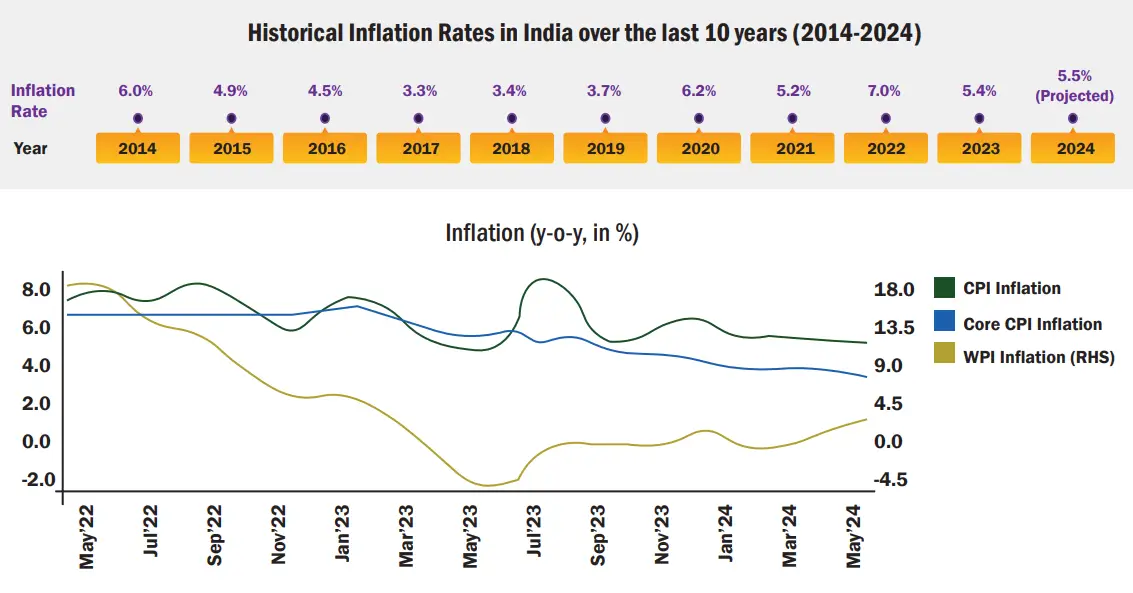
Inflation trends in India: Last 10 years -
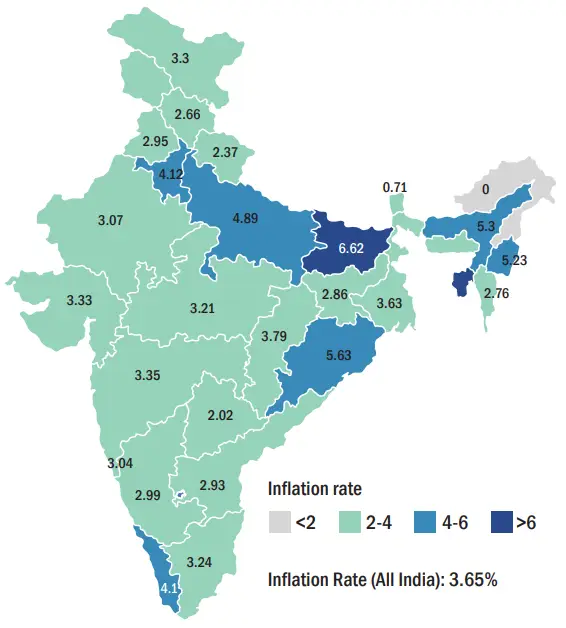
Over the past decade India has experienced notable fluctuations in inflation rates influenced by various economic factors including rising food and fuel prices, supply chain disruptions caused by the Covid -19 pandemic and government policies. In India, the inflation rate is measured using two indices, the Consumer Price Index (CPI) and the wholesale price index (WPI).
The CPI tracks the change in the price of a basket of goods and services consumed by a household like food, clothing, household, transportation and healthcare. The WPI analyses the inflation of only goods across 697 commodities. WPI-based wholesale inflation considers the price change at which consumers buy goods at a wholesale price or in bulk from factories, mandis, etc.
Inflation poses challenges and impacts the Indian household in majorly two areas - necessities like food, clothing and healthcare and other category of expenditure like education, housing etc. both in terms of affordability and availability. To exemplify this, let us take the standard price of bread (400 gms) in the year 2021 was Rs25/ - Rs30/ - With the current food inflation rate of 5.6%, the price of bread rose to Rs45/- reflecting the ongoing inflation and rising production cost. The rate of inflation for education has been significantly higher at 10%. A private engineering institution that charged Rs 1 lakh per year in tuition fees in 2010 has increased its costs to Rs 3 lakhs per year in 2022.
This loop can have long-term effects on health and future chances, particularly for vulnerable people. A survey conducted in March 2023 found that 58 percent of respondents in India reported that rising inflation affected their ability to pay for basic necessities such as food, clothing, and healthcare. In contrast, 49 percent of respondents said they were unable to save because of inflation. Addressing these issues requires comprehensive policies focused on stabilizing prices as well as enhancing economic resilience with prudent investment strategies by individuals.